
Women in the Conventions
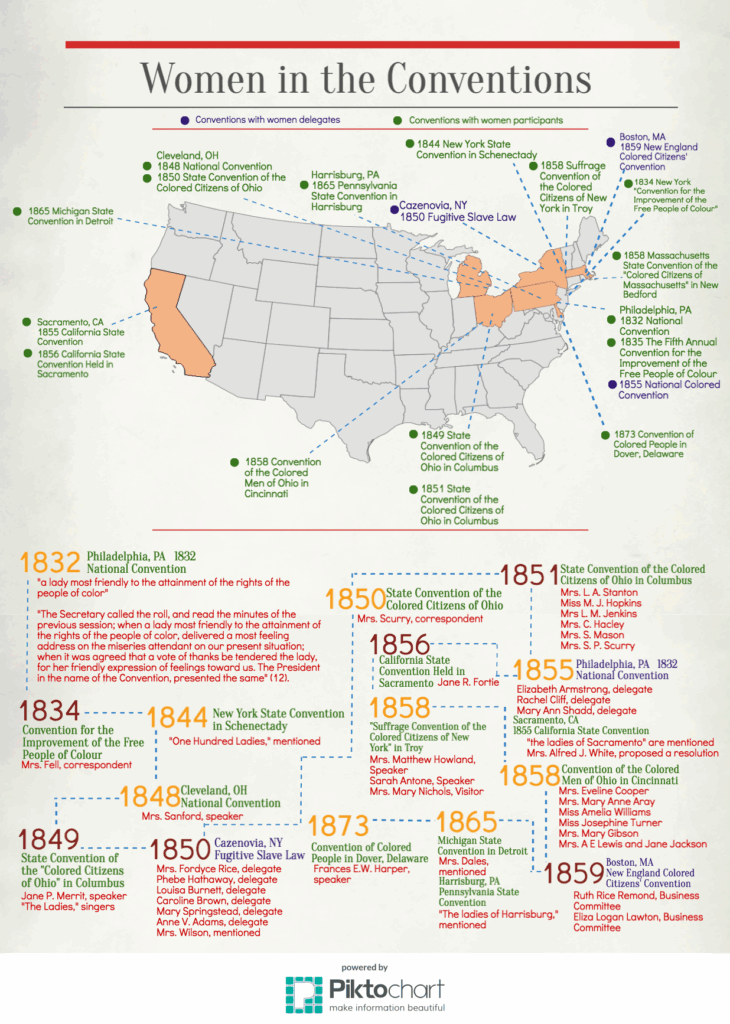
Figure 1. The illustration below shows women’s attendance in Colored Conventions from 1832 to 1859. While this exhibit focuses on the 1830s conventions, it is important to note that the desire of the women in this exhibit to privilege their voice and experience were passed on to succeeding generations.
For further reading about women’s participation in conventions, visit the exhibit, The “Conventions” of Conventions: Political Rituals and Traditions.
Boarders and Their Attendance in Philadelphia Conventions Held in the 1830s
Figure 2. This graph shows names of individuals who stayed at Serena Gardiner’s boarding house and attended the Colored Conventions in Philadelphia between 1830 and 1835.
» Click on the lines next to names to find out more about their participation in later conventions. Click on the years to access convention minutes.
Hall and Churches Where Philadelphia Conventions Were Held
Figure 3. The illustration below shows the proximity of boarding houses to Colored Conventions locations. Above Pine St. between 6th and 7th Streets were the homes of the Johnsons and Gardiners. Both were situated on a narrow street called Elizabeth St. This location was paved to the ground at the turn of the century to make space for the Gen. George A. McCall School.
Occupations Dominated by Women
Figure 4. The table below shows the trend for some of the occupations dominated by women. The large numbers of milliners suggest that the hat industry was competitive. African-American women had to compete with more established white milliners. Dressmakers and seamstresses had to meet the demands of their discriminating African-American clientele and to match the quality and style of popular Parisian clothes.
» Hover above the dots to learn more about exact figures.


